

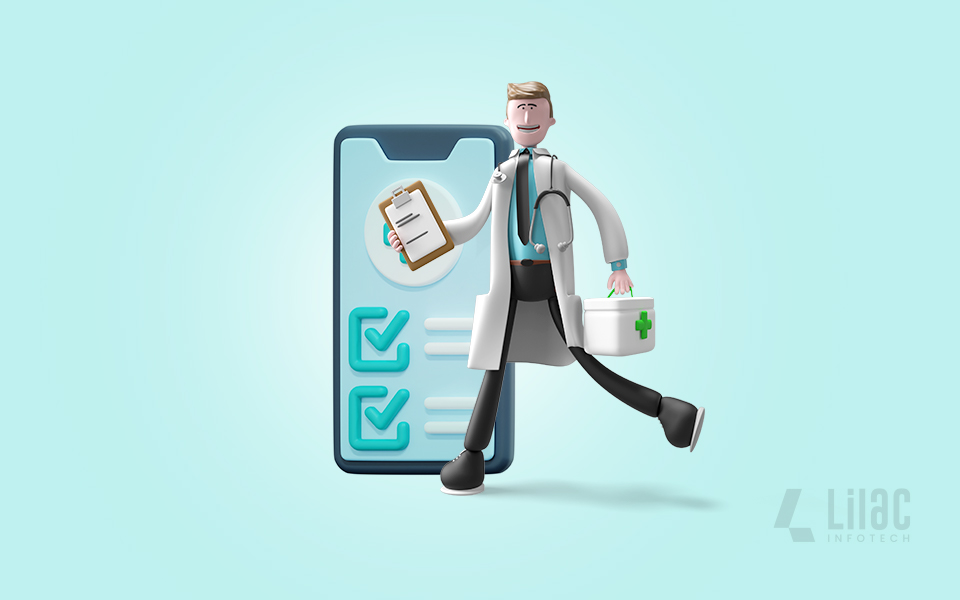
Executive Overview
Healthcare in 2026 is firmly mobile‑first and AI‑driven, with patients expecting to book appointments, consult doctors, and manage health records through apps rather than phone calls or paper files. Telemedicine, AI diagnostics, and remote monitoring have moved from niche to mainstream, making doctor booking and consultation apps a core part of modern healthcare delivery. For founders and product leaders, the opportunity lies in combining trusted clinical workflows with AI‑powered personalisation, predictive insights, and automation.
This report outlines how to plan, design, and build a doctor appointment booking app, online doctor consultation app, or broader healthcare app in 2026, with AI implemented as core infrastructure rather than a superficial add‑on. It covers market trends, must‑have features, architecture decisions, AI use cases, regulatory considerations, and a practical step‑by‑step development process.
Market and Technology Trends in 2026
Mobile healthcare apps now enable patients to book appointments, consult online via video, access medical reports, monitor vitals, and order medicines from a single smartphone. Telemedicine and online consultation gained massive traction during the COVID‑19 era and have since become a preferred channel, especially for routine and follow‑up care. The number of digital health apps has crossed hundreds of thousands globally, intensifying competition and pushing founders to differentiate through user experience and AI capabilities.
Artificial intelligence is no longer experimental; it is embedded into healthcare apps for predictive diagnostics, triage, monitoring, and clinical decision support. Generative AI adds a new layer by summarising consultations, translating medical jargon, and powering conversational patient assistants. Edge AI on devices such as smartphones and wearables enables real‑time health analysis while reducing latency and dependency on the cloud, supporting privacy‑preserving designs.
Core App Types and Business Goals
Three overlapping product types dominate this space in 2026:
- Doctor booking apps: Focus on discovering doctors, checking availability, and scheduling in‑clinic or virtual appointments. They primarily reduce front‑desk workload and improve patient access.
- Online doctor consultation apps (telemedicine): Enable secure chat, audio, or video consultations, e‑prescriptions, and follow‑up care, often complemented by at‑home lab tests. These apps monetise via per‑consultation fees, subscriptions, or corporate plans.
- Comprehensive healthcare apps: Integrate booking, teleconsultation, electronic medical records, billing, lab integrations, remote monitoring, and patient engagement features.
Founders must define whether the initial product is a focused appointment app, a full telemedicine solution, or a broader digital health platform, as this affects the feature set, regulatory scope, and technical architecture.
Must‑Have Features for Doctor Booking and Consultation Apps
Telehealth and booking apps share a common baseline feature set on both the patient and doctor sides.
Patient‑facing features
- Onboarding and profiles: Patient registration, identity verification, medical history, allergies, and insurance details.
- Doctor discovery: Search and filters by speciality, location, language, fees, and ratings.
- Real‑time availability and scheduling: Calendar views, slot selection, timezone awareness, rescheduling, and cancellations.
- Online consultations: Secure video, audio, and chat sessions with integrated file sharing for reports or images.
- E‑prescriptions and reports: Digital prescriptions, lab reports, and visit summaries stored in a personal health record.
- Payments and billing: Multiple payment methods, invoices, and insurance or corporate plan handling.
- Notifications and reminders: Push and SMS reminders for appointments, medications, and follow‑ups to reduce no‑shows.
Doctor and admin features
- Doctor profiles and credential management: Qualifications, experience, licenses, practice locations, and consultation fees.
- Electronic medical records (EMR): Access to patient history, notes, and previous prescriptions with granular access control.
- Appointment and schedule management: Calendar management, blocking slots, and managing in‑clinic versus online sessions.
- Clinical documentation tools: Templates for notes, diagnoses, and referrals, increasingly augmented by AI documentation assistants.
- Admin console: User management, pricing rules, content management, analytics, and regulatory configuration.
How AI Is Transforming Healthcare Apps in 2026
In 2026, AI moves from standalone features to a core layer that interprets data and orchestrates workflows across the app.
Key AI patterns include:
- Predictive AI: Models trained on vitals, symptoms, and historical data to predict risk of deterioration, readmission, or complications, helping clinicians prioritise interventions.
- Triage and symptom checking: Intelligent symptom checkers that guide patients through structured questions and suggest potential conditions or appropriate care levels before they book a doctor.
- Generative AI assistants: LLM‑based chatbots that answer common queries, explain lab results in plain language, and support pre‑visit and post‑visit engagement.
- AI copilot for clinicians: Assistants that summarise consultation transcripts, auto‑draft SOAP notes, and surface relevant guidelines or previous labs inside the clinician interface.
- Edge AI and IoT: On‑device models analysing signals from wearables or home medical devices to detect anomalies in near real time.
Strategically, the most successful apps embed AI into patient journeys and clinical workflows rather than presenting it as a separate “AI feature”.
Product Requirements: From MVP to Scalable Platform
A typical roadmap for a doctor booking or online consultation app starts with a focused MVP and evolves into a richer platform as usage grows.
MVP scope
For a doctor booking + online consultation MVP, a pragmatic scope often includes:
- Patient registration and authentication
- Basic doctor profiles and specialties
- Search and filtered listings
- Appointment booking and rescheduling
- Video or audio consultation integration
- E‑prescription PDF generation
- Push notifications and email confirmations
- Basic admin dashboard and analytics
AI in the MVP is usually introduced through lightweight components such as FAQ chatbots, basic symptom checkers, or automated reminder personalisation. The focus is on validating demand, usability, and operational fit with clinics or partner doctors.
Scaling beyond MVP
As the product matures, the roadmap typically adds:
- Comprehensive EMR and lab integration
- Advanced triage and risk scoring
- AI‑assisted clinical documentation
- Chronic disease management modules
- Integration with wearables and remote monitoring
- Multi‑clinic and enterprise features (e.g., role‑based access, multi‑tenant setups)
These expansions require a more modular architecture and stronger governance around data, AI models, and compliance.
Step‑by‑Step Development Process
Most modern guides converge on a similar phased approach to building doctor appointment and telemedicine apps.
1. Discovery and requirement analysis
Discovery involves understanding business goals, patient and doctor pain points, and regulatory constraints in target markets. Competitive analysis helps identify must‑have features and white spaces. Deliverables typically include:
- Problem and goal definition (e.g., reduce no‑shows, expand teleconsultations)
- User personas and journeys (patients, doctors, admin)
- Feature list split into MVP and later phases
- Regulatory and compliance checklist
2. UX and UI design
Healthcare UX must convey trust, simplicity, and accessibility. Designers create user stories and low‑fidelity prototypes, then refine them into high‑fidelity clickable prototypes validated with stakeholders. Accessibility guidelines such as WCAG are applied, and UX for both patients and clinicians is optimised for minimal friction.
3. Architecture and technology selection
Architecture decisions include choosing between monolithic and microservices patterns, REST or GraphQL APIs, and native or cross‑platform frameworks like React Native or Flutter. For scalability and security, many teams adopt microservices, containerization, and cloud‑based infrastructure with encrypted databases and audit logging.
On the AI side, teams must decide where models run (cloud versus edge), how they integrate with existing EMR/EHR systems, and how to manage data pipelines and model updates.
4. Development and integration
Backend development covers user management, appointment logic, payments, EMR, and admin tools, while frontend development implements patient and doctor apps or web portals. Telemedicine capabilities are added via custom media servers or third‑party SDKs. AI components are integrated as services or modules with clear APIs and guardrails.
Third‑party integrations often include payment gateways, SMS and email providers, identity verification, and external EMR/EHR or lab systems.
5. Testing, security, and compliance
Given the sensitivity of health data, rigorous testing and security reviews are mandatory. Test types include functional, performance, security, usability, and interoperability tests, especially for telemedicine and data exchange. Encryption in transit and at rest, role‑based access control, and detailed audit logs are standard.
Compliance requires aligning with regulations such as HIPAA, GDPR, or local equivalents, ensuring informed consent, data minimisation, and clear privacy policies.
6. Deployment, monitoring, and iteration
After launching on app stores or the web, teams monitor performance, error rates, funnel metrics, and clinician adoption, feeding insights back into the roadmap. Observability is crucial for AI features: model performance, drift, and bias must be monitored, and there should be clear override mechanisms for clinicians.
Continuous delivery and agile practices help incorporate feedback from doctors, patients, and operations quickly.
Practical AI Implementation Ideas for 2026
Founders often ask where to start with AI in healthcare apps. In 2026, several patterns offer high value with manageable risk when implemented correctly.
- Intelligent appointment suggestions: Use predictive models to suggest optimal time slots based on historical no‑show patterns, patient preferences, and clinician schedules.
- AI‑assisted triage bot: A conversational interface that collects symptoms, flags emergencies, and routes patients to the right speciality or care pathway.
- Consultation summarizer: A generative AI service that converts call transcripts into structured notes and patient‑friendly summaries for both doctor and patient portals.
- Medication adherence nudges: Personalised reminders based on behavioural patterns and risk scores, escalating to care teams if adherence drops.
- Risk dashboards: For chronic disease programs, dashboards that surface high‑risk patients based on vitals, labs, and engagement signals.
Each AI feature should be framed as decision support, not automated diagnosis, with transparency about limitations and validation against clinical standards.
Regulatory, Privacy, and Ethical Considerations
Healthcare apps must treat data security and ethics as first‑class product requirements, particularly when AI is involved.
Key considerations include:
- Data protection: Encrypt data at rest and in transit, anonymise or pseudonymise where possible, and minimise data collection.
- Consent and transparency: Clearly explain what data is collected, how AI is used, and how patients can opt out of certain AI‑driven features.
- Bias and fairness: Audit AI models for biased performance across demographic groups and incorporate clinician oversight.
- Explainability: Provide human‑interpretable rationales for AI recommendations where they influence clinical decisions.
- Cross‑border data flows: For international apps, ensure data residency and transfer practices comply with local laws.
Ethical AI in healthcare is not just a legal requirement; it directly influences patient and clinician trust, which is critical for adoption.
Monetisation and Business Models
Common monetisation models for doctor booking and consultation apps include:
- Per‑consultation fees: Patients pay per teleconsult, with revenue shared between the platform and doctors.
- Subscriptions: Membership plans for unlimited or discounted consultations, often used in corporate wellness programs.
- Clinic SaaS: Selling the platform as white‑label or SaaS to hospitals and clinics for their own patient base.
- Ancillary services: Revenue from pharmacy orders, lab test bookings, or insurance integrations.
AI capabilities can justify premium tiers (e.g., advanced monitoring, personalised care plans) if they demonstrably improve outcomes or convenience.
Key Takeaways for Founders in 2026
Building a doctor booking, online consultation, or healthcare app in 2026 means building on top of an AI‑first, mobile‑first healthcare ecosystem. Success depends on solving a specific patient or provider problem, designing trustworthy and simple experiences, and embedding AI where it clearly enhances safety, efficiency, or personalisation.
Teams should start with a tightly scoped MVP, validate with real clinicians and patients, and then scale into richer EMR integration, remote monitoring, and AI‑copilot features as the product matures. With the right mix of domain expertise, engineering, and responsible AI practices, there is significant room for new entrants to build impactful healthcare apps in 2026 and beyond.
Lilac Infotech designs and builds end‑to‑end healthcare and doctor booking platforms—from requirement analysis and UX to Flutter/React Native apps, secure backends, EMR integrations, and AI‑powered features tailored to your specialty and region. Whether you need a focused online consultation MVP or a scalable multi‑clinic platform, the team can help you architect, develop, and launch a compliant, production‑ready solution within defined timelines and budgets.
Recent Posts
How to Build a Grocery Delivery App Like Blinkit or Instamart
Oct 13, 2026
How to Start a Home Services Business with a Mobile App in 2026
Oct 09, 2026
Laundry Software Development Company for Smart Laundry Businesses
Oct 08, 2026
How to Build a Multi-Vendor Delivery Platform for Your Business
Oct 06, 2026


























Post a Comment