

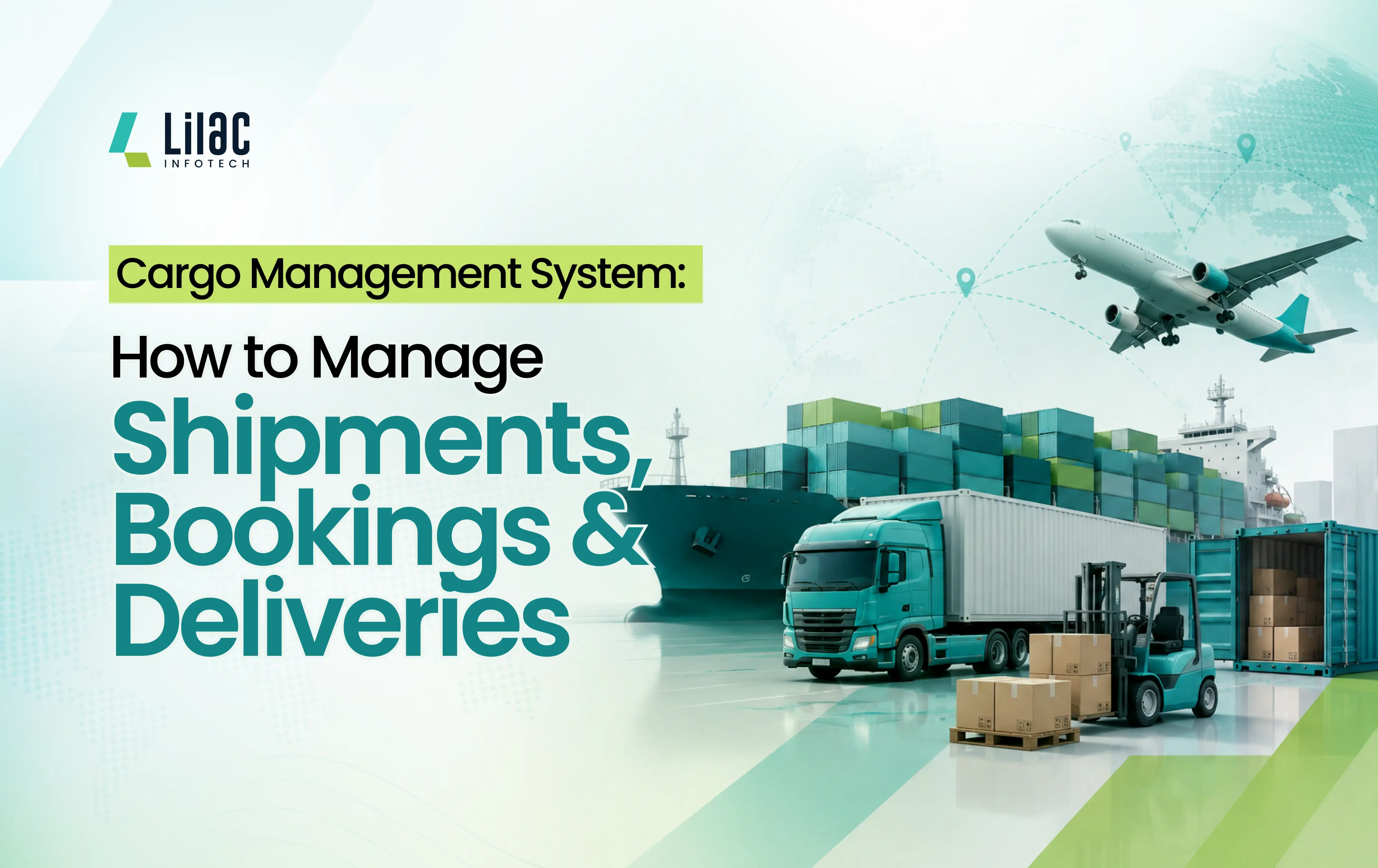
Managing a cargo business requires coordination at every stage of the cargo journey. A business needs to receive bookings, record cargo details, create shipment records, monitor shipment status, and manage deliveries until the cargo reaches its destination.
When these activities are handled manually through paper records, spreadsheets, emails, or separate tools, keeping information consistent can become difficult. A cargo management system provides a structured way to manage these activities digitally.
The basic cargo management process can be understood as:
Booking → Shipment → Tracking → Delivery
This article explains how each stage works and how a cargo management system can help businesses organize the complete cargo workflow.
What Is a Cargo Management System?
A cargo management system is a software application used to manage information and processes involved in handling cargo.
Instead of maintaining booking, shipment, tracking, and delivery information separately, a cargo management system can organize these activities within a connected digital workflow.
The system may be used to manage information such as:
- Customer details
- Cargo details
- Booking information
- Shipment records
- Origin and destination
- Shipment status
- Tracking information
- Delivery information
The exact features depend on the software and the requirements of the cargo business.
The main purpose is to provide a structured way to manage cargo information from the initial booking through delivery.
How Does Cargo Management Work?
Cargo management starts when a customer places a booking and continues until the shipment is delivered.
A typical workflow is:
1. Booking: Record the customer's cargo request and relevant details.
2. Shipment: Create and maintain the shipment record.
3. Tracking: Update and monitor the shipment's status.
4. Delivery: Manage delivery information and complete the shipment process.
These stages are connected. Information collected during booking can be used for shipment management, while shipment information can be used to maintain tracking and delivery records.
This is where acargo management system becomes useful: it provides a central place to manage the information associated with each stage.
1. How to Manage Cargo Bookings
The cargo journey begins with a booking.
A cargo booking records the customer's request to send cargo from one location to another. The business needs to capture the information required to process that booking.
Depending on the cargo company's workflow, booking information may include:
- Customer details
- Sender information
- Consignee or receiver information
- Cargo type
- Package or quantity details
- Origin
- Destination
- Booking date
- Special handling instructions
With cargo booking software, these details can be recorded digitally rather than being maintained only through paper forms or spreadsheets.
Why Booking Information Matters
Accurate booking information provides the foundation for the rest of the cargo process.
If booking information is incomplete or difficult to find, employees may need to repeatedly verify details before processing the shipment.
A structured digital booking record gives the business a consistent starting point for shipment management.
2. How to Manage Cargo Shipments
After the booking is created, the cargo moves into the shipment process.
A cargo shipment management systemhelps businesses maintain the information associated with a shipment.
The shipment record can connect the cargo with its booking and other relevant operational information.
Depending on the business, shipment information may include:
- Shipment reference
- Customer information
- Cargo details
- Origin and destination
- Shipment status
- Delivery information
- Relevant operational updates
The purpose of shipment management is to maintain an organized record of the cargo while it moves through the company's operational process.
Booking vs Shipment
A booking and a shipment are related, but they represent different stages.
Booking: The customer's request or cargo reservation.
Shipment: The cargo movement and associated operational record after the booking is processed.
Keeping these stages connected helps the business maintain continuity from the initial request to the actual shipment.
3. How to Track Cargo Shipments
Once a shipment is being processed or moved, the business needs to maintain its current status.
Cargo tracking software can help businesses record and monitor shipment status within the cargo management system.
A business may use status stages such as:
Booked → Processing → In Transit → Arrived → Out for Delivery → Delivered
These are example stages. The actual status workflow should reflect the cargo company's operations.
Why Shipment Status Matters
Shipment status provides an indication of where the cargo currently stands in the operational process.
For example, if a customer asks about a shipment, staff can refer to the recorded shipment status instead of searching through multiple documents.
A centralized cargo tracking system can therefore make shipment information easier for authorized users to access and manage.
4. How to Manage Cargo Deliveries
Delivery is the final major stage of the cargo workflow.
Once the shipment reaches the destination or enters the delivery process, the business needs to manage the relevant delivery information.
A cargo delivery management system can help maintain information such as:
- Shipment reference
- Destination
- Delivery status
- Delivery updates
- Completion status
The delivery record should remain connected to the relevant shipment so that the business can understand the complete cargo journey.
From Shipment to Delivery
The process can be summarized as:
Shipment Created → Shipment Processed → Cargo in Transit → Destination → Delivery → Completed
The exact steps depend on how the cargo company operates.
The important point is that delivery should be treated as part of the overall shipment workflow rather than as a completely separate record.
Cargo Management Workflow
A cargo management system connects the major stages of cargo operations:

Manual Cargo Management vs a Cargo Management System

The purpose of using a cargo management system is to organize these related processes in one structured workflow.
Why a Connected Cargo Workflow Matters
The four stages of cargo management are not independent.
The information created during booking is relevant to the shipment. Shipment information is relevant to tracking, and tracking information is relevant when managing delivery.
A connected system can therefore provide a clearer operational record of the cargo journey.
For cargo businesses, this can be particularly useful when employees need to:
- Find a shipment record
- Check booking information
- Review shipment status
- Access delivery information
- Maintain consistent operational records
CargoPro: Cargo Management Software by Lilac Infotech
CargoPro by Lilac Infotech is a web-based cargo management application for cargo businesses looking to manage their cargo operations digitally.
The product is positioned around the core cargo workflow:
Bookings → Shipments → Tracking → Deliveries
Instead of treating each stage as a completely separate activity, a cargo management application provides a structured environment for managing related cargo information.
For a business considering cargo management software, the most important consideration is whether the system fits its actual booking, shipment, tracking, and delivery workflow.
Cargo businesses can discuss their operational requirements with Lilac Infotech to explore how CargoPro can fit their cargo management process.
How to Choose a Cargo Management System
Before choosing cargo management software, cargo businesses should first understand their own workflow.
Consider questions such as:
- How are cargo bookings currently recorded?
- How are shipment records maintained?
- How is shipment status updated?
- How is cargo tracking handled?
- How are deliveries recorded?
- Where is cargo information currently stored?
- Do employees need a centralized system to access operational records?
The right cargo management system should support the business's actual workflow rather than forcing the business into an unsuitable process.
Frequently Asked Questions
What is a cargo management system?
A cargo management system is software used to manage cargo operations, including bookings, shipments, tracking, and deliveries.
How does a cargo management system work?
It connects the main stages of the cargo process. A typical workflow is Booking → Shipment → Tracking → Delivery, with relevant information maintained throughout the process.
What is cargo booking software?
Cargo booking software provides a digital way to record and manage cargo booking information before the shipment enters the next stage.
What is cargo shipment management software?
Cargo shipment management software helps businesses maintain organized shipment records and relevant operational information.
How does cargo tracking software work?
Cargo tracking software allows businesses to record and monitor shipment status according to their defined cargo workflow.
How can cargo deliveries be managed digitally?
A cargo management system can maintain delivery-related information and connect it with the relevant shipment record, allowing the business to manage delivery status as part of the overall workflow.
Conclusion
A cargo management process does not end when a booking is created. The booking needs to become a shipment, the shipment needs to be tracked through its operational stages, and the delivery needs to be recorded when the cargo reaches its destination.
That is why a cargo management systemshould be viewed as a connected workflow:
Booking → Shipment → Tracking → Delivery
A centralized digital approach can help cargo businesses organize the information associated with each stage instead of managing separate records for every activity.
CargoPro by Lilac Infotechis a web-based platform designed for cargo businesses looking to manage their cargo operations digitally.

Looking for a Cargo Management System?
Talk to Lilac Infotech about CargoPro.Share your cargo workflow and requirements with the team to explore a suitable digital approach for managing bookings, shipments, tracking, and deliveries.
Article Tags
Recent Posts

How to Start a Home Services Business with a Mobile App in 2026
Oct 09, 2026
Laundry Software Development Company for Smart Laundry Businesses
Oct 08, 2026
How to Build a Multi-Vendor Delivery Platform for Your Business
Oct 06, 2026
Best Queue Management Software for Businesses: Features, Cost & Benefits
Oct 01, 2026
























Post a Comment