

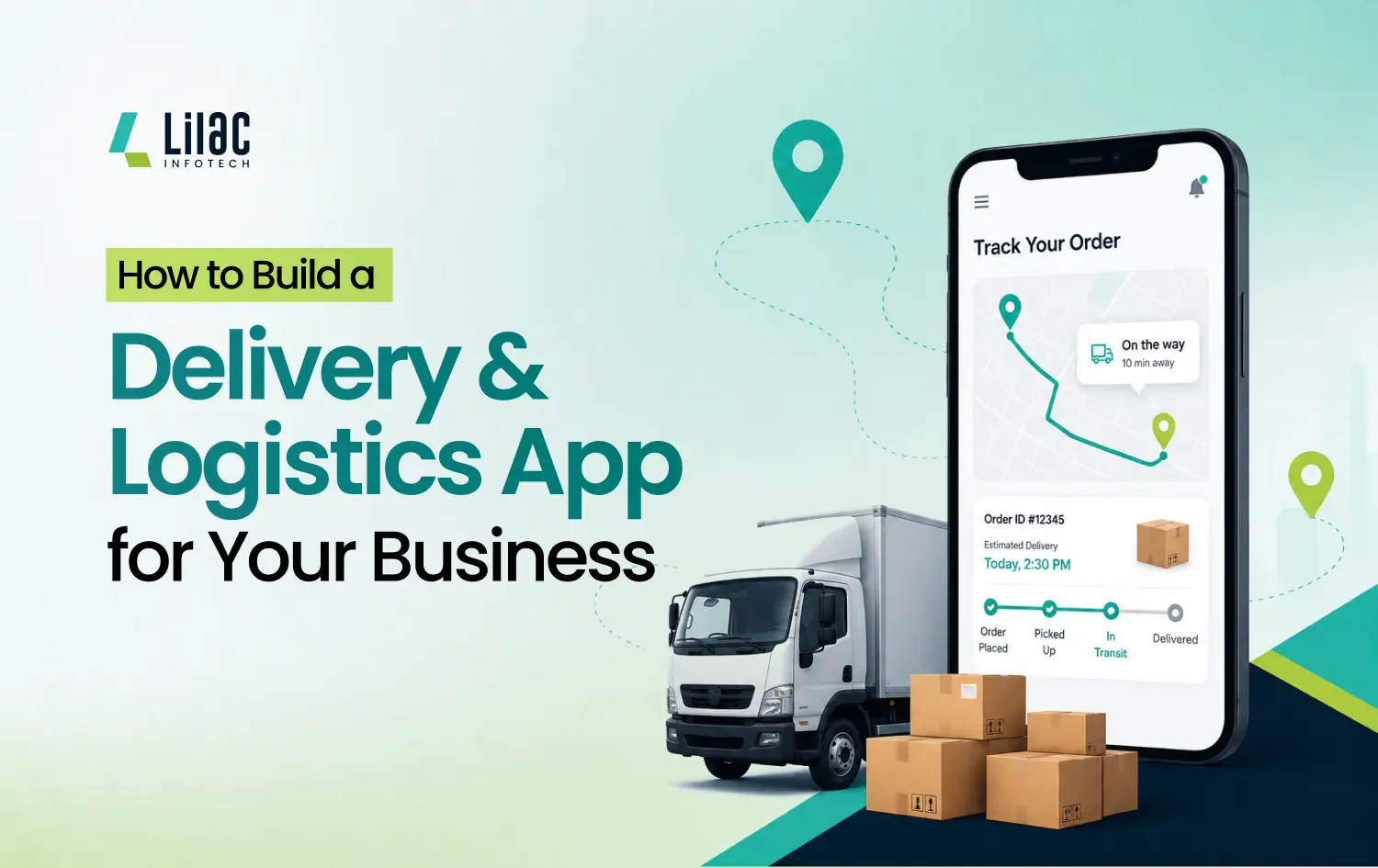
Businesses today need faster, more reliable, and more transparent delivery operations. Whether you manage courier services, e-commerce deliveries, food delivery, retail distribution, or last-mile logistics, manual processes can quickly become difficult to manage.
A delivery and logistics app can help businesses automate dispatching, track drivers, manage orders, optimize routes, communicate with customers, and monitor operations from a centralized platform.
But building a successful logistics app involves more than creating a mobile application. You need to understand your business model, user requirements, essential features, technology, development process, and ongoing maintenance.
This guide explains how to build a delivery and logistics app for your business, what features you need, how the development process works, and what to consider before contacting an app development company.
What Is a Delivery & Logistics App?
A delivery and logistics app is a softwaresolution designed to manage the movement of products, parcels, orders, or goods from one location to another.
Depending on the business model, the platform may include:
- Customer application
- Delivery driver application
- Admin dashboard
- Delivery management system
- Backend services
- Tracking and notification systems
A logistics platform can be used by courier companies, retailers, e-commerce businesses, restaurants, distributors, wholesalers, and
Why Should You Build a Delivery & Logistics App?
As delivery operations grow, manual management becomes harder. Businesses may have to coordinate many customers, drivers, orders, addresses, and delivery updates every day.
A delivery management app can help organize these processes digitally.
Centralize Delivery Operations
Orders, drivers, delivery assignments, and status updates can be managed through one platform.
Reduce Manual Coordination
Automation can reduce repetitive work related to driver assignments, notifications, and delivery status updates.
Improve Delivery Visibility
A delivery tracking app can provide businesses and customers with information about active deliveries when tracking is supported.
Improve Customer Experience
Customers can receive order updates, delivery notifications, and tracking information through the application.
Support Business Growth
A scalable logistics management system can be designed to support increasing customers, orders, drivers, and delivery locations.
Top Benefits of Creating a Logistics App
A logistics application can provide operational benefits when it is designed around the specific needs of the business.
1. Streamline Delivery Operations
A centralized platform can bring orders, drivers, assignments, and delivery status into one system, making daily operations easier to coordinate.
2. Reduce Manual Work
Automating repetitive tasks such as driver assignment, notifications, and status updates can save time for operations teams.
3. Enable Real-Time Delivery Tracking
GPS-based functionality can help businesses monitor active deliveries and provide customers with better visibility.
4. Manage Drivers Efficiently
A driver management system can help businesses organize driver profiles, availability, assignments, and delivery history.
5. Improve Route Planning
Route optimization software can help businesses plan delivery routes based on locations and operational requirements.
6. Improve Customer Experience
Customers can receive delivery updates, notifications, order information, and tracking details through the application.
7. Simplify Proof of Delivery
Proof of delivery software can help businesses record delivery confirmation through signatures, photos, or other approved methods.
8. Improve Operational Visibility
A delivery management system can provide information about orders, drivers, active deliveries, and completed deliveries.
9. Support Business Scalability
A custom logistics app can be designed to support future increases in customers, drivers, orders, and delivery areas.
10. Make Better Business Decisions
Reports and analytics can help businesses understand delivery activity, operational performance, and areas that may require improvement.
Planning a logistics app for your business? Contact Lilac Infotech to discuss your requirements and identify the features your platform actually needs.
Who Needs a Delivery & Logistics App?
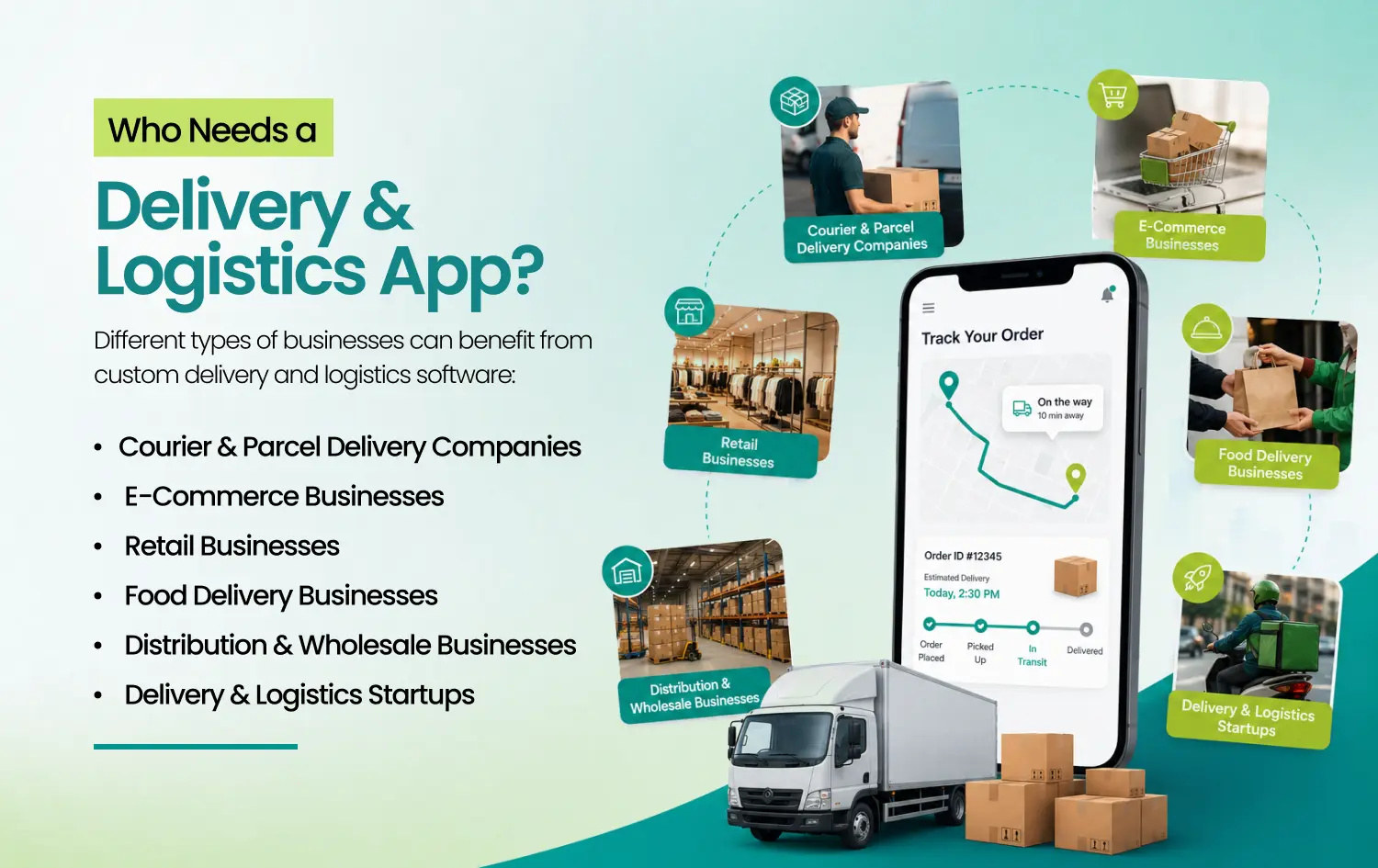
Different businesses can benefit from custom logistics software.
Courier Companies
Courier businesses can use courier management softwareto manage parcels, pickups, drivers, tracking, and proof of delivery.
E-Commerce Businesses
Online retailers can use delivery software to coordinate order fulfillment and provide customers with delivery updates.
Retail Businesses
Retail stores can use a delivery platform to manage local deliveries from stores or warehouses to customers.
Food Delivery Businesses
Restaurants and food businesses can use an on-demand delivery app to coordinate orders and delivery partners.
Distribution Businesses
Wholesalers and distributors can use logistics software to coordinate deliveries between warehouses, businesses, and customers.
Delivery Startups
Entrepreneurs can launch a new delivery service using acustom delivery app designed around their business model.
Essential Features of a Delivery & Logistics App
The features required depend on the business. A typical platform can include customer, driver, and admin functionality.
Customer App Features
A customer-facing application may include:
- Registration and login
- User profile
- Address management
- Delivery booking
- Order details
- Delivery status
- Real-time tracking
- Push notifications
- Online payments
- Delivery history
- Ratings and reviews
- Customer support
The customer journey should be simple, with important information easily accessible.
Driver App Features
A delivery driver app can include:
- Driver registration
- Driver profile
- Availability status
- Delivery assignments
- Pickup details
- Drop-off details
- Navigation
- GPS location
- Delivery status updates
- Customer contact
- Proof of delivery
- Delivery history
- Notifications
The driver interface should focus on quick and clear actions.
Admin Dashboard Features
The admin dashboard can provide centralized control over:
- Customers
- Drivers
- Orders
- Delivery assignments
- Dispatch operations
- Pricing
- Delivery zones
- Payments
- Reports
- Analytics
- Notifications
- Support
Advanced Features for Logistics Apps
Once the core requirements are defined, businesses can consider additional features.
GPS Tracking
AGPS tracking app can provide location information for active drivers or vehicles.
Route Optimization
Route planning can help businesses organize multiple deliveries more efficiently according to their operational requirements.
Automated Notifications
The platform can send notifications for order confirmation, driver assignment, pickup, delivery progress, and completion.
Digital Proof of Delivery
Drivers can record delivery confirmation through supported methods such as signatures or photographs.
Fleet Management
Businesses managing multiple vehicles can add fleet management software functionality for vehicle and driver information, trips, and related operations.
Analytics and Reporting
Businesses can use reports to understand order volumes, delivery activity, driver performance, and other relevant metrics.
How to Develop a Delivery & Logistics App
A successful delivery app development process should start with business requirements.
1. Define Your Business Model
Determine exactly what your business delivers and how deliveries are handled.
Consider whether you need a:
- Courier platform
- Parcel delivery app
- Last-mile delivery solution
- Food delivery platform
- Retail delivery system
- B2B logistics platform
2. Identify Your Users
Determine who needs access to the platform.
You may need:
- Customer app
- Driver app
- Delivery partner app
- Dispatcher dashboard
- Admin dashboard
3. Plan the UI/UX
Design user journeys around real tasks.
Customers should be able to book or track deliveries easily, while drivers should be able to view assignments and update delivery status quickly.
4. Develop the Application
The development team can build the mobile applications, backend, database, APIs, and admin dashboard.
Technology choices should be based on scalability, security, performance, integrations, and platform requirements.
5. Integrate Required Services
Depending on the project, integrations may include:
- Maps
- GPS services
- Payment gateways
- SMS
- Push notifications
- ERP systems
- CRM systems
- E-commerce platforms
6. Test the Application
Testing should cover the complete delivery workflow, including functionality, APIs, payments, GPS, notifications, security, performance, and device compatibility.
7. Launch and Maintain
After testing, the app can be deployed on the required platforms.
Ongoing maintenance helps address bugs, security updates, integration changes, performance improvements, and future feature requirements.
How Much Does It Cost to Build a Delivery App?
Delivery app cost is one of the first questions businesses ask before contacting a development company.
There is no single fixed price because every application has different requirements.
The logistics app development cost can depend on:
- Number of platforms
- Number of user types
- Features
- UI/UX complexity
- Backend architecture
- Admin dashboard
- GPS tracking
- Payment integration
- Third-party APIs
- Testing
- Maintenance
A basic delivery application generally requires less development effort than a complete platform with customer, driver, admin, fleet, payment, tracking, and analytics functionality.
For a realistic estimate, share your business requirements and feature list with an experienceddelivery app development company.
Common Challenges in Logistics App Development
GPS and Location Accuracy
GPS information can be affected by connectivity, device settings, and environmental conditions. Tracking functionality should be designed and tested carefully.
Scalability
As order and user volumes increase, the system may need to handle more data and activity. Backend architecture should be planned according to expected growth.
Data Security
Delivery platforms may process customer details, addresses, order information, and payment-related data. Security should be considered throughout development.
Third-Party Integrations
Maps, payment gateways, communication services, and existing business systems can create additional technical requirements.
How to Choose a Logistics App Development Company
Choosing the rightlogistics app development company can directly affect the quality and long-term success of your platform.
Before hiring a development partner, ask:
- Have you developed similar applications?
- Can you understand and map our delivery workflow?
- Can you develop customer and driver apps?
- Can you build an admin dashboard?
- Can you integrate GPS and mapping services?
- Can you integrate our existing software?
- How do you handle testing and security?
- What support is available after launch?
- How will the application scale as our business grows?
Do not compare companies only by price. Look for a development partner that understands your business problem and can explain a practical technical solution.
Why Choose Lilac Infotech for Delivery App Development?
Lilac Infotech provides custom mobile app and software development services for businesses looking to digitize their operations.
For delivery and logistics projects, Lilac Infotechcan develop solutions including customer apps, driver apps, admin dashboards, backend systems, tracking functionality, API integrations, and other business-specific features.
The development process focuses on understanding the business workflow before defining the solution. This helps ensure that the application is built around actual operational requirements rather than unnecessary features.
If you are planning to build a logistics app, launch a courier platform, or develop a custom delivery management system, Lilac Infotech can help you plan and develop the solution.
Ready to Build Your Delivery & Logistics App?
Tell Lilac Infotech about your business model, target users, required features, and delivery workflow.
Our team can help you identify the right technology approach, define the core features, and plan a custom delivery or logistics application.
Start your delivery app development project with Lilac Infotech today.
Frequently Asked Questions
How much does it cost to build a delivery app?
The cost depends on features, platforms, integrations, and complexity.Lilac Infotech can provide an estimate after reviewing your requirements.
How long does it take to develop a logistics app?
The timeline depends on features, platforms, integrations, and testing. Lilac Infotech can provide a project timeline after analyzing your requirements.
How do I build a delivery and logistics app?
Define your business model, users, features, and platforms first. Lilac Infotech can help with planning, UI/UX, development, testing, and deployment.
Can Lilac Infotech develop a custom logistics app?
Yes. Lilac Infotech can develop custom logistics applications based on your business workflow and operational requirements.
Can you build a delivery app for Android and iOS?
Yes. Lilac Infotech can develop delivery applications for Android and iOS based on your target users and project requirements.
Can a delivery app include real-time tracking?
Yes. Lilac Infotech can integrate suitable GPS and mapping services to support real-time delivery tracking.
Can you develop a driver delivery app?
Yes. Lilac Infotech can develop driver applications with delivery assignments, navigation, status updates, notifications, and proof-of-delivery functionality.
Can a logistics app manage multiple drivers?
Yes. A custom logistics platform can manage multiple drivers, delivery assignments, orders, and operational activities from a centralized system.
Can you integrate GPS and maps into a delivery app?
Yes. Lilac Infotech can integrate suitable mapping and location services into a delivery or logistics application.
Should I start with an MVP delivery app?
An MVP can help businesses validate their core delivery workflow before investing in advanced features. Lilac Infotech can help define a suitable MVP scope.
Final Thoughts
Building a delivery and logistics app can help businesses organize orders, drivers, tracking, dispatching, and customer communication through one digital platform.
The most effective approach is to start with the actual business problem. Define your users, delivery workflow, required features, integrations, budget, and future growth requirements before development begins.
Whether you need a courier delivery app, last-mile delivery app, delivery management software, fleet management solution, or custom logistics platform, focus on features that solve real operational problems.
Have a delivery app idea? Contact Lilac Infotech today to discuss your requirements and plan your custom delivery and logistics solution.
Article Tags
Recent Posts

Why Lilac Infotech Is the Best Choice for Mobile App Development in India
Oct 22, 2026
How to Build a Grocery Delivery App Like Blinkit or Instamart
Oct 13, 2026
How to Start a Home Services Business with a Mobile App in 2026
Oct 09, 2026
Laundry Software Development Company for Smart Laundry Businesses
Oct 08, 2026
























Post a Comment