


Want to build a multi-vendor delivery platform for your business? This guide explains how to build a multi-vendor delivery platform, including the essential features, customer and vendor apps, delivery partner management, admin dashboard, development process, technology considerations, development cost, and key factors to consider before launching.
Whether you are planning a multi-vendor delivery app in Kerala or India or targeting international markets such as the USA, Canada, UK, Australia, UAE, and other English-speaking countries, understanding the development process can help you choose the right solution for your business.
In this article, we will cover multi-vendor delivery app development, platform features, development costs, business benefits, customization options, and how to choose a multi-vendor delivery app development company for your project.
What Is a Multi-Vendor Delivery Platform?
A multi-vendor delivery platform connects customers, vendors, delivery partners, and administrators through one system.
Customers can browse products and place orders, vendors can manage products and orders, delivery partners can accept and complete deliveries, and administrators can manage the entire platform.
A custom multi-vendor delivery app can be developed for businesses in Kerala, across India, and international markets such as the USA, Canada, UK, Australia, UAE, and other markets.
Understanding the Concept of a Multi-Vendor Delivery Platform
A multi-vendor delivery platform is an online marketplace where multiple sellers can offer their products or services to customers. These platforms typically integrate delivery logistics, payment gateways, and customer support systems, allowing vendors to focus on their core business while the platform manages the operational complexities.
How Does a Multi-Vendor Delivery Platform Work?
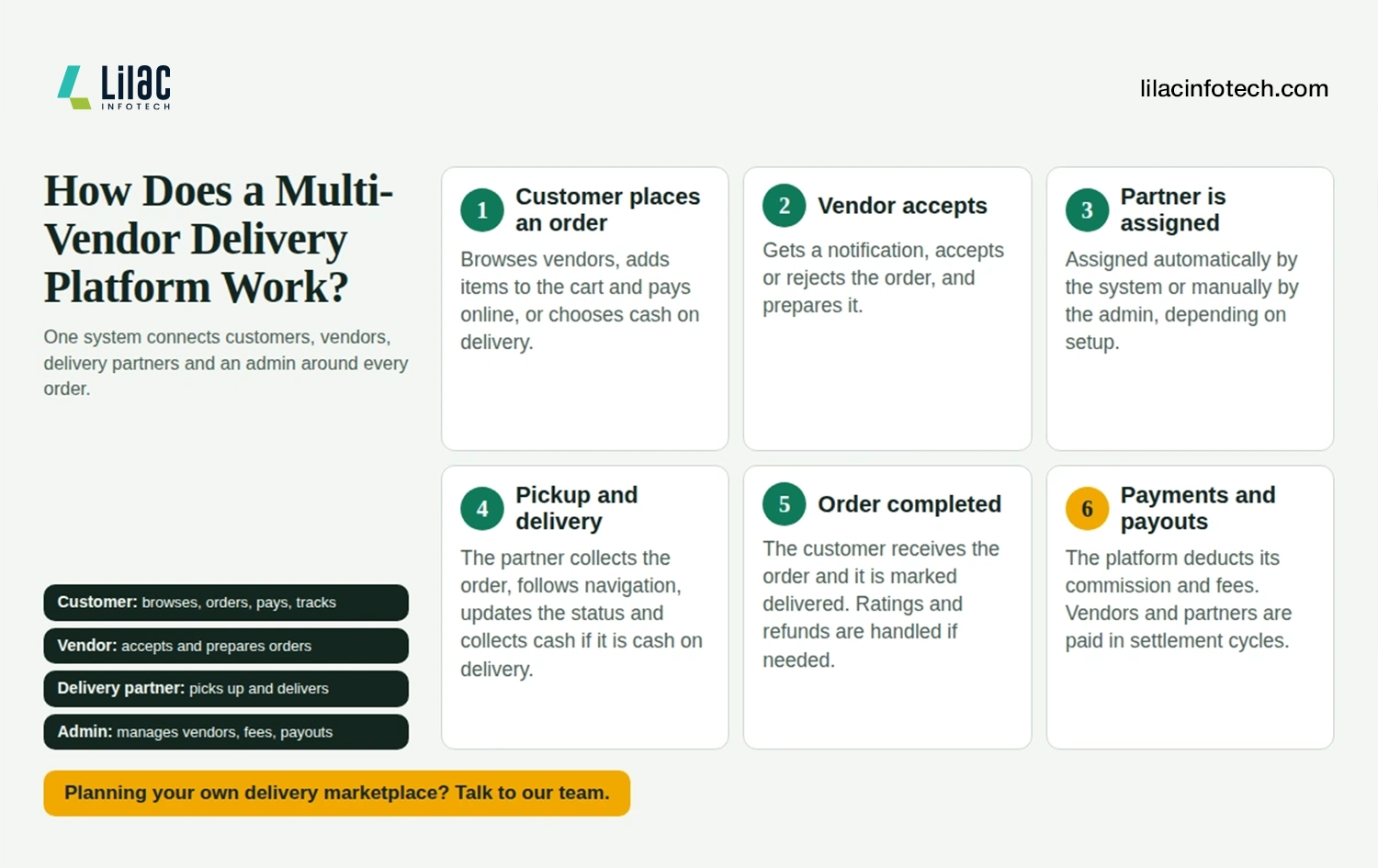
Key Features of a Multi-Vendor Delivery Platform
- Vendor Management: A centralized dashboard for vendors to manage their listings, orders, and analytics.
- Order Management: Streamlined order processing from multiple vendors, including notifications and tracking.
- Secure Payment Gateways: Multiple payment options to enhance customer convenience and trust.
- User-Friendly Interface: Intuitive navigation for both vendors and customers to enhance user experience.
- Delivery Logistics: Integration with third-party delivery services to manage shipping efficiently.
Why Should You Build a Multi-Vendor Delivery Platform?
A custom platform brings vendors, customers, and delivery partners together and lets you manage all operations from one system.
1. Multiple revenue streams
Earn through vendor commissions, delivery and service fees, subscriptions, and advertising.
2. Centralized vendor management
Onboard vendors, manage products, monitor orders, and track performance from one admin dashboard.
3. Better customer experience
Customers can browse multiple vendors, place orders, pay online, and track deliveries in one app.
4. Efficient delivery management
Assign orders to delivery partners, who receive navigation and update order status through the app.
5. Scalability
Expand the platform to include more vendors, customers, products, delivery partners, and locations as you grow.
Steps to Build Your Multi-Vendor Delivery Platform
1. Conduct Market Research
Before diving into development, it's crucial to understand your target market. Analyze existing platforms, identify your competitors, and gather insights on consumer preferences. Tools like Google Trends and surveys can provide valuable data on what features customers value most.
2. Define Your Business Model
Decide on the revenue model for your platform. Common options include:
- Commission-Based: Take a percentage of each sale made on your platform.
- Subscription Model: Charge vendors a monthly fee to list their products.
- Freemium Model: Offer basic services for free while charging for premium features.
3. Choose the Right Technology Stack
The technology stack affects the performance, security, scalability, and maintenance of your multi-vendor delivery app.
Depending on your requirements, your development team may use:
- Frontend: React, Angular, or Vue.js
- Backend: Node.js, Django, Laravel, or similar technologies
- Database: MySQL, PostgreSQL, or MongoDB
- Cloud: AWS, Google Cloud, or Microsoft Azure
- Mobile: Native Android/iOS or cross-platform development
An experienced multi-vendor app development company can recommend the technology based on your platform requirements, target users, and future growth.
4. Develop the Platform
Once the business requirements and technology are finalized, development can begin. A complete multi-vendor delivery platform may include:
- Customer mobile app
- Vendor app or vendor dashboard
- Delivery partner app
- Admin dashboard
- Backend and APIs
- Order management system
- Delivery management system
The platform should be scalable, secure, mobile-friendly, and easy to manage as the number of customers, vendors, and orders increases.
5. Integrate Essential Features
As you develop, integrate essential features such as:
- Search Functionality: Advanced filters and search options to help customers find products easily.
- Vendor Profiles: Allow vendors to showcase their brand and products effectively.
- Customer Reviews: Enable customers to leave feedback, enhancing trust and transparency.
6. Implement Payment Solutions
Integrate reliable payment gateways like PayPal, Stripe, or Square to ensure secure transactions. Consider offering multiple payment options, including credit/debit cards, e-wallets, and even cryptocurrencies, to cater to a wider audience.
7. Launch and Market Your Platform
Once your platform is ready, focus on launching it effectively. Utilize SEO strategies, social media marketing, and content marketing to drive traffic to your site. Consider launching promotions or discounts to attract initial users and vendors.
8. Monitor, Analyze, and Optimize
Post-launch, continuously monitor your platform's performance. Utilize analytics tools to track user behavior, sales, and vendor performance. Regularly update your platform based on feedback and emerging trends to ensure continued growth and user satisfaction.
How Much Does It Cost to Build a Multi-Vendor Delivery Platform?
The multi-vendor delivery app development cost depends on the scope and complexity of the project.
Important cost factors include:
- Number of applications
- UI/UX complexity
- Custom features
- Backend development
- Vendor management
- Admin dashboard
- Payment integration
- GPS tracking
- Third-party APIs
- Security requirements
- Technology selection
- Maintenance and support
A basic MVP will generally require fewer resources than a large platform with advanced automation, multiple integrations, analytics, and international functionality.
For an accurate estimate, prepare your feature requirements and discuss them with an experienced multi-vendor delivery app development company.
Work With an Experienced App Development Company
Choosing the right development partner can make the development process easier and more efficient. Look for a company that understands multi-vendor platforms, mobile app development, delivery management, APIs, payment integration, GPS tracking, and scalable backend development.
Lilac Infotech provides custom mobile and web application development solutions for businesses looking to build multi-vendor delivery platforms, delivery apps, and management software.
Whether you are targeting Kerala, India, the USA, Canada, the UK, Australia, the UAE, or other international markets, Lilac Infotech can help you plan and develop a customized platform based on your business requirements.
Ready to build your multi-vendor delivery platform? Talk to Lilac Infotech about your idea, required features, target market, and development requirements.
Conclusion
Building a multi-vendor delivery platformrequires careful planning, the right technology, and a clear understanding of your target market.
From customer and vendor apps to delivery partner management, payment integration, GPS tracking, and admin controls, every part of the platform should work together to create a smooth ordering and delivery experience.
Whether you are building a platform for Kerala, India, the USA, Canada, the UK, Australia, the UAE, or another international market, a customized solution can be designed around your business model and growth plans.
With the right development partner, you can create a scalable multi-vendor delivery platform that supports vendors, improves customer experience, and creates new revenue opportunities.
Frequently Asked Questions
1. What is a multi-vendor delivery platform?
A platform that connects multiple vendors, customers, delivery partners, and admins in one system. Lilac Infotech develops customized solutions for different business models.
2. How much does a multi-vendor delivery app cost?
The cost depends on features and complexity. Lilac Infotech offers affordable, customized development solutions based on your budget and requirements.
3. What features does a multi-vendor delivery app need?
Customer app, vendor panel, delivery partner app, admin dashboard, payments, GPS tracking, and order management are key features. Lilac Infotech can customize them for your business.
4. Can Lilac Infotech build an international delivery platform?
Yes. Lilac Infotechdevelops multi-vendor delivery platforms for India and international markets, including the USA, Canada, UK, Australia, and UAE.
5. How can I start my project with Lilac Infotech?
Share your business idea, required features, and target market with Lilac Infotech to plan your customized multi-vendor delivery platform.
Article Tags
Recent Posts

Why Lilac Infotech Is the Best Choice for Mobile App Development in India
Oct 22, 2026
How to Build a Grocery Delivery App Like Blinkit or Instamart
Oct 13, 2026
How to Start a Home Services Business with a Mobile App in 2026
Oct 09, 2026
Laundry Software Development Company for Smart Laundry Businesses
Oct 08, 2026
























Post a Comment