

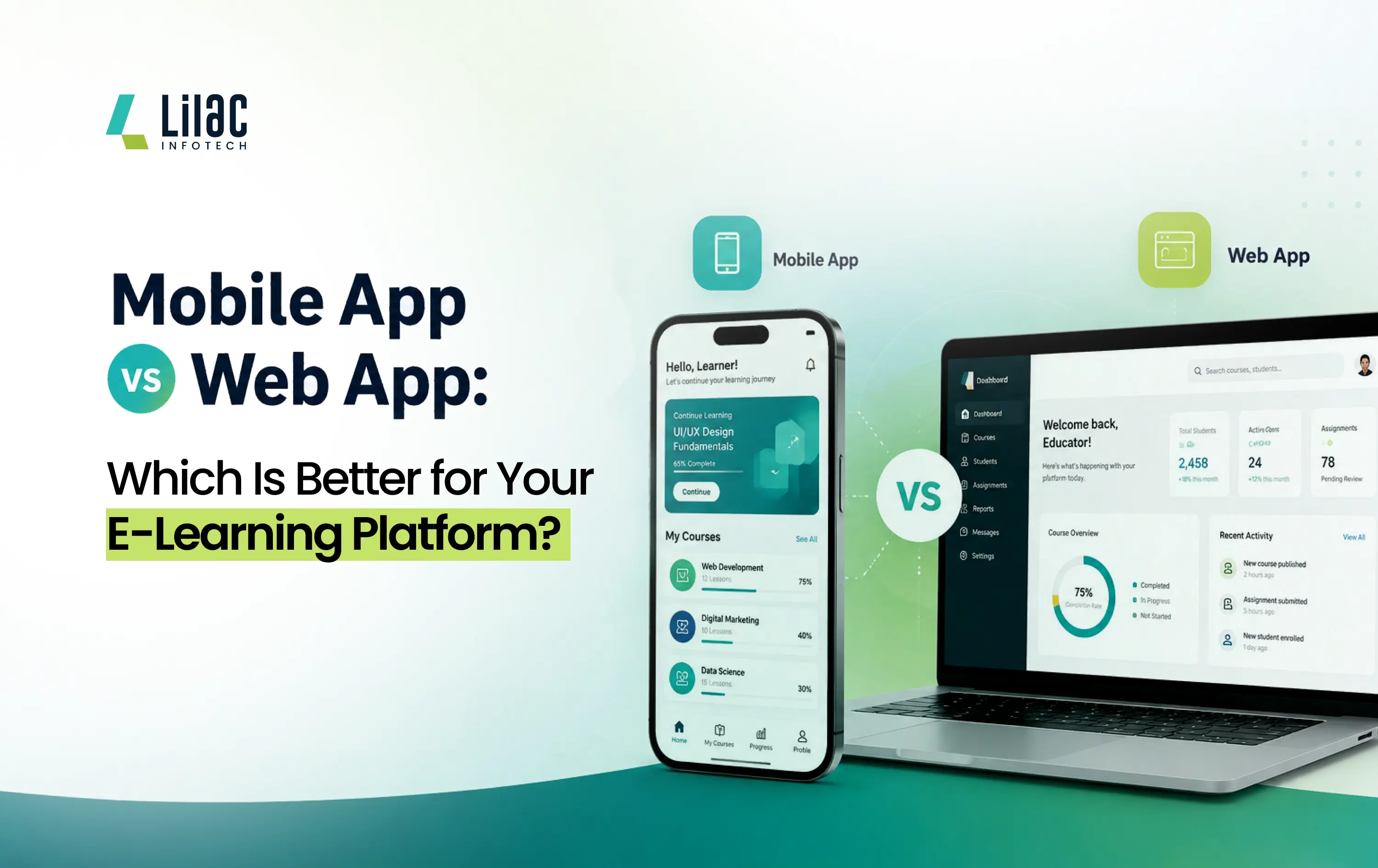
Online education has moved far beyond video lectures and PDF notes. Today's learners expect quick access, smooth navigation, and the ability to study anytime, anywhere. This shift has pushed e-learning businesses to ask one important question: should we build a mobile app, a web app, or both?
The answer isn't the same for every business. It depends on your budget, target audience, learning format, and long-term goals. In this blog, we'll break down what mobile apps and web apps actually are, how they differ, and which option makes the most sense for an e-learning platform in 2026.
Whether you're planning student-facing content, instructor dashboards, or appointment booking for live tutoring sessions, this guide will help you make an informed decision before you invest in app development.
What Is a Mobile Application?
A mobile application is software built specifically to run on smartphones and tablets, installed through the Apple App Store or Google Play Store. Mobile apps are designed to use device-level features such as push notifications, cameras, GPS, and offline storage, which makes them a strong fit for interactive and personalized learning experiences.
Types of Mobile Applications for E-Learning
There is more than one way to build a mobile app, and each type suits a different stage of an e-learning business:
- Native iOS Apps: Built specifically for Apple devices using Swift. Coaching institutes and exam-prep platforms often choose native iOS apps for the smoothest performance, especially when offering offline video downloads and daily notifications.
- Native Android Apps: Built using Kotlin or Java for Android devices, giving developers deep access to hardware and OS-level features such as gamified progress tracking and background downloads.
- Hybrid Mobile Applications: Built once and deployed across both iOS and Android using a single codebase. Startups launching an MVP version of their e-learning product often pick hybrid apps to enter the market faster without doubling development costs.
- Cross-Platform Mobile Applications: Built with frameworks like Flutter or React Native, these apps share most of their code across platforms while still delivering near-native performance. Growing e-learning brands that need consistent branding and feature parity across iOS and Android frequently choose this route.
For e-learning platforms with limited budgets but a need for both iOS and Android coverage, cross-platform mobile application development is usually the most practical starting point.
What Is a Web Application?
A web application runs directly inside a browser, without needing to be downloaded or installed. Students can simply open a link on any device, whether it's a laptop, tablet, or phone, and start learning immediately. Web application development is often faster and more budget-friendly, especially in the early stages of a platform.
Web apps are a natural fit for course catalogs, video libraries, live class scheduling, and appointment booking systems, since they don't require the user to commit to a download before exploring the platform.
Difference Between Mobile App and Web App
Here's a side-by-side comparison to help you understand where each option stands out for an e-learning business:

Which Delivers Better Results for E-Learning: Mobile App or Web App?
There's no single winner here — the right choice depends on how your students actually use your platform.
- If your learners need offline lessons, daily reminders, or gamified progress tracking, a mobile app will serve them better.
- If your priority is quick access, wider reach, and lower upfront cost, a web app is the smarter starting point.
- If you offer live tutoring or counseling sessions, a web-based appointment booking system paired with a mobile app for notifications often works best.
Many successful e-learning platforms don't pick just one option. They start with a responsive web app to validate their idea and reach a broad audience, then invest in native or cross-platform mobile applications once they build a steady user base that wants a richer, app-based experience.
Conclusion
Choosing between a mobile app and a web app for your e-learning platform isn't about picking the "trendier" option — it's about matching the technology to how your students actually want to learn. Web apps offer speed, lower cost, and instant access, making them ideal for early-stage platforms and appointment booking features. Mobile apps, whether native, hybrid, or cross-platform, offer deeper engagement through offline access, push notifications, and a more immersive learning experience.
The smartest approach for most growing e-learning businesses is to start lean with a web application and expand into iOS, Android, hybrid, or cross-platform mobile applications as your user base grows. This way, you invest in the right technology at the right stage of your business.
Frequently Asked Questions
1. What is the main difference between mobile app development and web app development for e-learning?
Mobile apps are installable iOS and Android apps with offline access and push notifications. Web apps run in the browser with no download needed. Lilac Infotech, a mobile and web app development company, helps you choose the right fit.
2. Are hybrid mobile applications good for e-learning platforms?
Yes. Hybrid mobile applications use one codebase for iOS and Android, keeping costs low for e-learning startups. Lilac Infotech builds hybrid apps for online learning brands.
3. What are cross-platform mobile applications, and why do e-learning brands use them?
Cross-platform mobile applications, built with tools like Flutter, run on iOS and Android from shared code with near-native speed. Lilac Infotech offers cross-platform mobile application development for consistent branding.
4. Can appointment booking be added to an e-learning web app or mobile app?
Yes, on both. Lilac Infotech builds custom appointment booking features into e-learning apps and websites for tutoring and live classes.
5. How much does e-learning app development cost — mobile app vs web app?
Web apps cost less and launch faster; native iOS and Android apps cost more but offer richer offline features. Lilac Infotech offers free cost estimates for your e-learning project.
Ready to Build Your E-Learning Platform?
Lilac Infotech is a global, worldwide app and web development company building web apps, iOS apps, Android apps, and cross-platform mobile solutions for e-learning businesses. Get in touch today to bring your idea to life.
Article Tags
Recent Posts

Why Lilac Infotech Is the Best Choice for Mobile App Development in India
Oct 22, 2026
How to Build a Grocery Delivery App Like Blinkit or Instamart
Oct 13, 2026
How to Start a Home Services Business with a Mobile App in 2026
Oct 09, 2026
Laundry Software Development Company for Smart Laundry Businesses
Oct 08, 2026























Post a Comment